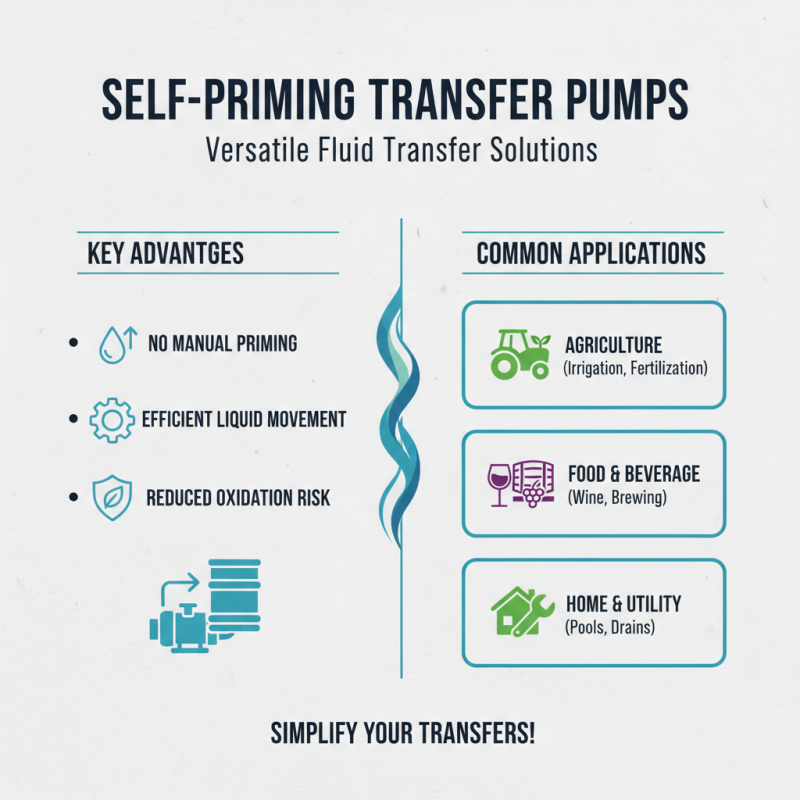
Picking out a self-priming transfer pump can feel pretty overwhelming, right? I mean, with so many options out there, it’s really important to find one that’s just right for what you need. The right Self Priming Transfer Pump can make everything much smoother and save you a headache in the long run.
First up, check the pump’s flow rate. This is a big deal because it really affects how well it performs. If it’s too slow, your job might get delayed, which nobody wants. But if it’s too fast, watch out for splashing or wasting fluid—it can get messy. Another thing folks often forget is how the material the pump handles might impact how long it lasts. For example, if you’re pumping stuff that’s pretty corrosive, your pump might not be a hero for long. Oh, and don’t forget about the power source—Electric Pumps might not cut it if you’re out in a remote spot without easy power access.
When you start thinking about brands, reputation really counts. Names like Rigid or GPI are pretty well-known, but don’t just go by fancy marketing. It’s super helpful to read reviews and see how they’ve performed for other people in real-life situations. Take a moment to consider what exactly you need and what fits your budget. Sometimes the most affordable option isn’t the best long-term value. So, yeah, investing in a good pump usually pays off in the end—better performance, fewer headaches.
Understanding Self Priming Transfer Pumps and Their Applications
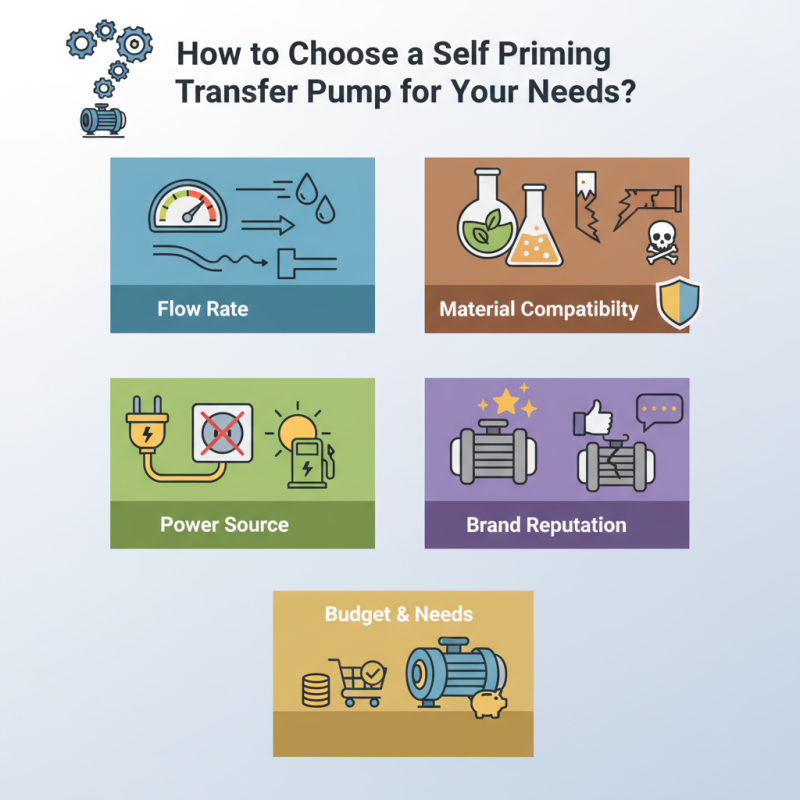
Self priming transfer pumps are versatile tools. They offer a unique ability to draw liquid without needing manual priming. This makes them especially useful in various applications, from agriculture to home brewing. For those interested in winemaking, a Self Priming Wine Transfer Pump can simplify the process significantly. It allows for the efficient movement of liquid, reducing the risk of oxidation during transfers.
Understanding how these pumps work helps in choosing the right model. They're designed to create a vacuum that draws liquid into the pump. However, not all Self Priming Pumps perform equally. Factors such as flow rate, maximum lift, and material compatibility should be considered. It’s easy to overlook details, and mistakes can be costly. A pump that’s not well-suited for your specific needs may lead to inefficiency or even damage to the liquid being transferred.
Pay attention to sizing, too. A pump too small may struggle with larger volumes, while one that’s too large might waste energy. It’s essential to find a balance that meets your needs without overcomplicating operations. Incomplete research might lead to overspending. Reflect on the intended use and the frequency of use to make a thoughtful choice.
Key Factors to Consider When Selecting a Self Priming Pump
Choosing the right self-priming transfer pump requires careful consideration of several key factors. First, think about the flow rate you need. This is crucial for efficiency. A pump with a higher flow rate can save you time. However, a pump that is too powerful might waste energy and increase costs. Strike a balance based on your specific task.
Next, look at the suction lift capability. This defines how high the pump can draw liquid from a source. If your source is low, a pump with a strong suction lift is essential. But, remember, not all pumps perform equally at various lift heights. Testing different options may reveal surprising inefficiencies.
Material and design matter too. Different fluids require specific materials to avoid damage. A pump that works well with water might fail with oil or chemicals. Be cautious about this mismatch. Lastly, consider the ease of maintenance. A model that is hard to service can lead to frustration down the line. Sometimes, simplicity in design pays off in long-term reliability.
Assessing Flow Rate Requirements for Your Specific Needs
When selecting a self-priming transfer pump, assessing flow rate is crucial. Flow rates vary based on specific applications. For instance, studies indicate that an efficient pump should ideally provide between 10 to 20 gallons per minute (GPM) for medium-scale agricultural tasks. This range often meets the demands of irrigation and liquid transfer without overloading the system.
Understanding your specific flow rate needs can save time and money. Many users underestimate how quick changes in demand affect performance. A pump with a low flow rate may struggle during peak usage, leading to inefficiencies. An industry report noted that pumps operating below required flow rates can waste energy and reduce lifespan by 30%. Reflecting on these aspects can prevent costly mistakes.
Moreover, knowing the viscosity of the liquid is essential. Thicker liquids, like oils, will need pumps designed for lower flow rates. These pumps often need more energy, increasing operational costs. For transfer pump self-priming applications, understanding these details leads to better decision-making. Failing to consider these factors may hinder overall effectiveness, highlighting the importance of tailored choices over generic solutions.
Evaluating the Pump Material and Construction Quality
When selecting a self priming transfer pump, the material and construction quality are essential. A reliable pump often uses high-grade materials. This can prevent corrosion and wear during operation. For example, stainless steel is known for its durability. It can withstand harsh conditions and chemical exposure. According to industry reports, pumps made from superior materials last 20-30% longer.
Construction quality also influences a pump's efficiency. Look for factors like the thickness of the casing and quality of seals. A thicker casing can handle pressure better. Poor seal quality may lead to leaks, wasting energy and fluid. Industry studies indicate that up to 15% of energy can be lost due to inefficient pumps. This emphasizes the need for thorough evaluation and careful selection.
Moreover, sourcing a China Self Priming Transfer Pump can be a mixed experience. Some manufacturers may prioritize cost over quality. Inconsistent quality control can lead to performance issues. It is vital to research and read reviews. Understand common pitfalls in the manufacturing process. A deeper dive may reveal necessary insights, allowing for a more informed decision.
Understanding Power Source Options: Electric vs. Gasoline
When choosing a self-priming transfer pump, understanding the power source is crucial. Electric pumps are often quieter and more efficient. They work well for indoor tasks or small-scale outdoor jobs. You simply plug them in, and they are ready to go. However, you need a reliable power source. A sudden outage can halt your work unexpectedly.
On the other hand, gasoLine Pumps offermobility. They can operate anywhere without being tethered to an outlet. This makes them ideal for remote locations or large outdoor projects. Yet, they can be noisy and emit fumes. Safety is a concern in enclosed spaces. Plus, maintenance might be more demanding due to the engine's complexity.
Consider the scope of your needs. If your work requires frequent movement, a gasoline pump may suit you better. Alternatively, if you prioritize efficiency and ease of use, an electric model could be your choice. Reflect on where you’ll use the pump. Each option has distinct advantages and drawbacks. Your decision should align with your specific demands and work environment.
Identifying Pipe Size and Connection Types for Compatibility
When choosing a self priming transfer pump, understanding pipe size and connection types is crucial. Different pumps have various compatibility factors. Measuring your existing pipeline diameter is a good starting point. A pump might not function properly if the pipe size doesn’t match. This can lead to frustrating inefficiencies. Sometimes, it’s easy to overlook this step. A few minutes spent measuring can save you time later on.
Connection types are another key consideration. There are various configurations available, such as threaded and quick-connect fittings. Identifying what you need is essential for seamless operation. Using a Cheap Self Priming Transfer Pump doesn't mean you have to compromise on connection quality. However, you must ensure that the fittings align perfectly. Misalignment can cause leaks or reduce the pump's efficiency. It's a detail that requires attention, yet many might brush it aside.
Before finalizing your choice, double-check the specifications. Compatibility issues could surface if you don't. Assess your options wisely. Balancing budget and functionality requires careful evaluation. With a bit of diligence, you can avoid common pitfalls in selecting a pump.
How to Choose a Self Priming Transfer Pump for Your Needs?
| Pump Model | Flow Rate (GPM) | Max Head (ft) | Pipe Size (inches) | Connection Type | Power Source |
| Model A | 10 | 30 | 1 | Threaded | Electric |
| Model B | 15 | 25 | 1.5 | Flanged | Gasoline |
| Model C | 20 | 40 | 2 | Quick Connect | Electric |
| Model D | 12 | 35 | 1 | Threaded | Solar |
Reviewing Maintenance and Service Requirements for Longevity
When selecting a self-priming transfer pump, maintenance is crucial. Proper care extends the lifespan of these pumps. Regular checks can help avoid unexpected problems. Pay attention to seals and connections. Leaks may indicate wear and tear that requires immediate action.
Tips for maintenance include regular inspections. Look for signs of corrosion or damage on the pump body. Lubricate moving parts to ensure smooth operation. Cleaning filters regularly is also key. Clogged filters can impede performance. Ensure you follow a maintenance schedule that suits your usage.
Over time, pumps may require deeper servicing. It’s easy to overlook small issues, but they can compound. Listen for unusual noises or vibrations. These may signal underlying problems. If the pump starts to lose efficiency, consider a thorough review. It might save you time and money in the long run.
Self Priming Transfer Pump Maintenance Needs
Maximizing Agricultural Efficiency: A Comprehensive Guide to Using QJ Deep Well Pumps for Irrigation Systems
Maximizing agricultural efficiency is crucial for sustainable farming practices, and using QJ deep well pumps for irrigation systems is an effective strategy to achieve this. Designed to operate directly submerged in water, these pumps excel in extracting groundwater from deep wells, making them an ideal choice for farmers in areas with limited surface water. The direct coupling of the motor with the water pump enhances performance and energy efficiency, ensuring that every drop of water is utilized effectively.
In addition to their primary role in agricultural irrigation, QJ deep well pumps offer versatility that benefits various sectors. They can also be employed for water supply and drainage in urban settings, factories, railways, mines, and construction sites. Their robust design makes them suitable for operation in challenging terrains, such as plateaus and mountainous regions, where access to clean water is vital not only for crops but also for livestock and local populations. By harnessing the potential of these pumps, farmers and businesses alike can improve their water management practices, promote sustainable growth, and reduce the environmental impact of water extraction.
FAQS
: Consider flow rate, suction lift capability, material compatibility, and ease of maintenance.
A higher flow rate saves time, but too powerful a pump may waste energy.
It determines how high the pump can draw liquid from a source.
Pumps need materials suited for specific fluids to avoid damage and inefficiency.
Electric pumps are quieter, efficient, and ideal for indoor or small outdoor tasks.
They are portable but can be noisy, emit fumes, and require more maintenance.
Regular checks and maintenance are essential for longevity and optimal performance.
Inspect seals, connections, for corrosion, and lubricate moving parts regularly.
Look for leaks, unusual noises, and decreased efficiency as warning signals.
Follow a consistent maintenance schedule and address small issues promptly.
Conclusion
Selecting the right transfer pump self priming for your needs involves understanding its applications and key factors that influence your choice. Start by assessing the specific flow rate requirements, which are crucial for efficient operation. Additionally, consider the materials and construction quality of the pump to ensure durability and reliability. Power source options, whether electric or gasoline, should align with your available resources and environmental conditions.
Compatibility is another key aspect; identifying the appropriate pipe size and connection types will facilitate seamless integration. Lastly, reviewing maintenance and service requirements can help extend the pump's lifespan, ensuring it meets your operational demands over time. By carefully evaluating these factors, you can make an informed decision when choosing a self priming transfer pump that best suits your specific applications.




 Whatsapp